
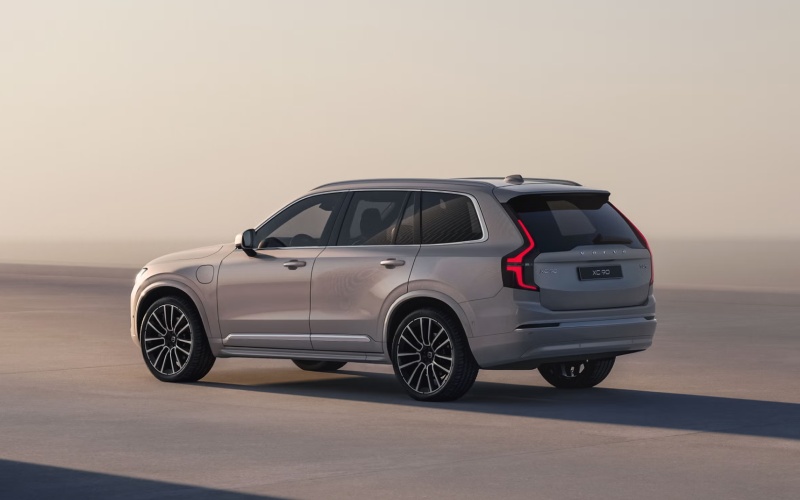
O'Steen Volvo Cars of Jacksonville - 2026 Volvo XC90 or 2026 Audi Q7 – Which three-row luxury SUV offers more usable cargo space for family life around Jacksonville, FL?
When families compare the Volvo and Audi playbooks, one question rises to the top: which three-row luxury SUV actually offers more usable cargo space and everyday flexibility? That day-to-day advantage becomes the difference between an easy school pickup with sports gear and a weekend trip that feels like Tetris with duffel bags. Below, we answer that question with a closer look at how the XC90’s design and features stack up against the Q7 for drivers who navigate urban errands, beach runs, and highway stretches around Jacksonville, FL.
The numbers that matter in real life
On paper, cargo room is a straightforward win for Volvo. The XC90 delivers up to 85.7 cu ft of maximum cargo capacity, enabled by a wide, flat floor with no load lip and seatbacks that fold in practical sections. The Q7 checks in at 69.6 cu ft with the second and third rows folded. The difference shows up when you try to slide in a stroller, a couple of coolers, or camping totes without removing a row of seats. Because the XC90’s load floor is flat and the opening is broad, you spend less time lifting heavy items up and over a bumper lip and more time getting on the road.
There is more to space than cubic feet. The XC90 also offers six- or seven-seat configurations, so you can prioritize a center aisle to the third row with second-row captain’s chairs or keep maximum seating with a bench. That choice makes third-row access easier for kids and teens without wrestling seatbacks, while the Q7’s setup focuses on a seven-seat bench layout.
Smart cabin packaging reduces daily friction
Thoughtful packaging helps the XC90 in ways that go beyond measurements. The cargo area features a hands-free power tailgate and a wide, flat landing zone that makes quick work of grocery runs or beach gear. Families love the available integrated booster cushion in the second-row center seat—a built-in way to help older kids achieve a proper belt fit, freeing up space you might have dedicated to a separate booster. Meanwhile, the Q7 supports family needs with power-folding third-row seats and available top-view camera with Virtual 360, yet the XC90’s everyday utility feels more cohesive because of that consistent, flat loading surface and flexible seating mix.
Technology also influences how easily you move through the day. With Google built in, the XC90 makes Google Maps, Google Assistant, and Google Play native to the vehicle—no extra apps, cables, or complex menus. That means less time fiddling with settings and more time focusing on the drive. Audi answers with the excellent MMI® touch response system, Audi virtual cockpit plus, and wireless Apple CarPlay® and Android Auto™, which are feature-rich and polished. Both systems get the job done; the XC90’s single vertical display and built-in Google ecosystem simply reduce steps for navigation and voice control.
How seating flexibility changes the weekend
Consider a Saturday that spans soccer, a quick home store run, and dinner with friends. The XC90’s available six-seat configuration creates a clear walkway to the third row, so passengers can slip to the back without tilting or sliding seats. If cargo calls, folding sections let you keep one seat up for a child and still open a long floor for gear. The Q7’s bench layout works well for consistent seven-passenger trips, but the captain’s chair option in the XC90 gives you the ability to adapt cabin flow to your plans.
- Cargo access: XC90’s flat, lip-free floor speeds up loading bulky or heavy items; Q7 requires more lift-over effort.
- Seating configuration: XC90 offers six or seven seats; Q7 emphasizes a seven-seat bench.
- Everyday tech: Google built-in in XC90 means native maps and voice; Q7 offers MMI® and wireless smartphone integration.
Lighting, visibility, and the feel of capability
Simple loading is only one part of the comfort equation. Visibility and maneuverability around town matter too. The XC90’s Matrix-design LED headlights with automatic high beams and cornering lights help on dim side streets and in parking structures, while the available 360-degree camera and Park Assist front, rear, and sides support precise low-speed placement. The Q7 counters with HD Matrix-design LED headlights in the Vision package, and driver aids like adaptive cruise assist with lane guidance and Audi side assist with pre sense® rear. Both vehicles deliver sophisticated assistance, and both are well-suited to family driving—yet the XC90’s calm steering and linear brake feel contribute to those stress-free errand runs where quick stops and tight turns are the norm.
On the capability front, the Q7 55 TFSI can tow up to 7,700 pounds when properly equipped, a strong figure for boat owners or those with larger trailers. The XC90 rates up to 5,000 pounds, which covers small trailers and weekend gear for most families. If you frequently haul near the higher end of that range, the Q7’s towing advantage may matter; otherwise, the XC90’s balanced performance, quiet ride, and flat cargo floor often prove more useful day to day.
Ownership details that add up
Families also weigh ownership experience, service, and long-term ease. Volvo’s Complimentary Factory Scheduled Maintenance for two years or up to 20,000 miles helps establish a smooth maintenance rhythm from the start, while Audi offers paid maintenance packages to streamline upkeep. Small details like the XC90’s low load floor and available integrated booster cushion keep paying dividends long after the first test drive—especially if you share the vehicle among drivers with different routines.
Who should choose which?
If your weekends revolve around carrying people and gear—strollers, coolers, folding chairs—plus the occasional home project haul, the XC90’s 85.7 cu ft maximum cargo capacity and flexible seating make everyday life easier. If your priorities lean toward maximum towing or you have a specific affinity for Audi’s MMI® interface and the feel of the 55 TFSI V6, the Q7 remains a strong contender. For most families, comparing space and usability first, though, Volvo’s packaging advantages tilt the decision.
Frequently Asked Questions:
Which SUV has more maximum cargo capacity?
The XC90 offers up to 85.7 cu ft of maximum cargo space, while the Q7 provides up to 69.6 cu ft with the second and third rows folded.
Can either model be configured with six seats?
The XC90 is available with six or seven seats; the Q7 focuses primarily on a seven-seat bench configuration.
Do both SUVs offer advanced LED headlights?
Yes. The XC90 features Matrix-design LED headlights with automatic high beams and cornering lights, while the Q7 offers HD Matrix-design LED headlights through the Vision package.
How do the infotainment systems differ?
The XC90 runs Google built-in natively, integrating Google Maps and Google Assistant. The Q7 provides MMI® with wireless Apple CarPlay® and Android Auto™ plus Audi virtual cockpit plus.
To see which layout fits your life best, schedule a drive with O'Steen Volvo Cars of Jacksonville—serving Orange Park, Daytona Beach, and Jacksonville—and bring a few real-world items you load weekly. The hands-on comparison is eye-opening.
Request more 2026 Volvo XC90 information
Categories:
Volvo XC90